
Understanding Bar and PSI: A Guide to Pressure Unit Conversion
In industries like automotive maintenance, HVAC systems, diving, and hydraulic machinery, pressure measurements play a crucial role. Two commonly used pressure units are Bar (metric) and PSI (pounds per square inch) (imperial). To ensure accuracy and safety, it’s vital to understand how to convert between them effectively.
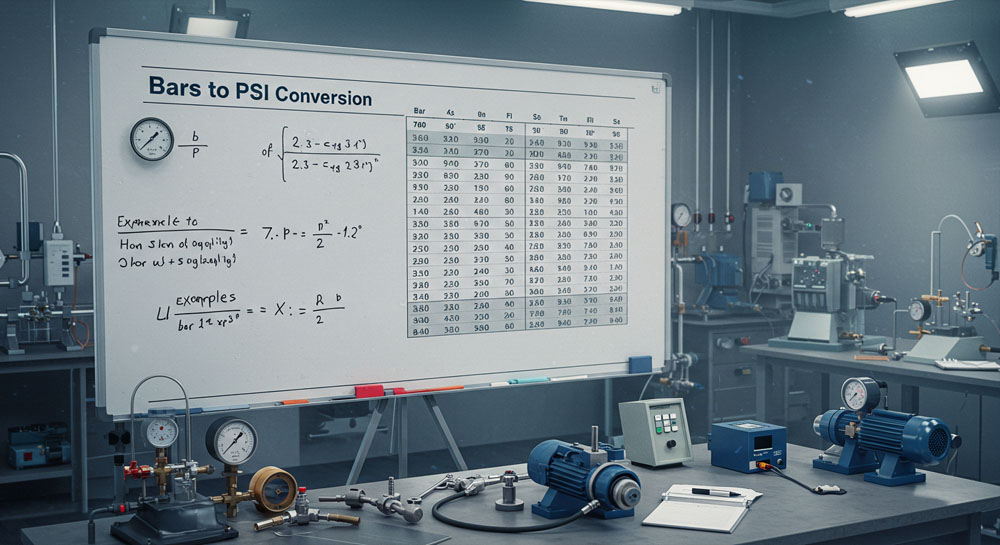
- 1 bar = 100,000 Pascals (Pa), which is approximately equal to the atmospheric pressure at sea level.
- 1 PSI ≈ 6,894.76 Pa, meaning 1 bar ≈ 14.5038 PSI, and 1 PSI ≈ 0.0689476 bar.
These conversions are essential for technicians, engineers, and even drivers who encounter pressure units in different systems or manuals.
Conversion Formulas and Examples
To manually convert between bar and PSI, use these straightforward formulas:
- PSI = Bar × 14.5038
- Bar = PSI × 0.0689476
For example:
- If a tire is inflated to 2.5 bar, its pressure in PSI is:
2.5 × 14.5038 = 36.26 PSI - A pressure reading of 3 bar equals:
3 × 14.5038 = 43.51 PSI
These formulas help maintain consistent measurements across systems and are useful for quick mental calculations or when digital tools are unavailable.
Quick Reference Table: Bar to PSI
Here’s a convenient table to help quickly convert common pressure values from bar to PSI:
| Bar | PSI (approx.) |
|---|---|
| 0.1 | 1.45 |
| 0.5 | 7.25 |
| 1.0 | 14.50 |
| 1.5 | 21.75 |
| 2.0 | 29.01 |
| 2.5 | 36.26 |
| 3.0 | 43.51 |
| 4.0 | 58.02 |
| 5.0 | 72.52 |
| 6.0 | 87.02 |
| 7.0 | 101.53 |
| 8.0 | 116.03 |
| 9.0 | 130.53 |
| 10.0 | 145.04 |
These rounded values are suitable for day-to-day reference and can be used when checking tire pressures, air compressors, or industrial instruments.
Why Converting Between Bar and PSI Matters
1. Automotive Tire Pressure and Road Safety
Most European car manufacturers recommend tire pressures in bar, while North American vehicles generally use PSI. Accurate conversion prevents under- or over-inflation, which affects fuel efficiency, tire wear, and driving safety.
2. Industrial Machinery and Hydraulic Systems
Machinery such as air compressors, pneumatic tools, and hydraulic presses often operate with pressure ratings listed in either bar or PSI. Engineers and operators must convert values accurately to prevent malfunctions or equipment damage.
3. Diving and Scuba Equipment
Diving cylinders and pressure gauges often use bar, but imported equipment might show PSI. Divers need to convert units correctly to monitor air supply and plan safe dives.
4. HVAC, Medical Devices, and Gas Systems
Pressure readings in HVAC systems, ventilators, blood pressure monitors, and gas meters may be given in either unit. Proper conversion ensures proper calibration, system performance, and safety compliance.
Practical Tips for Accurate Pressure Conversion
Here are five useful strategies to ensure you always handle pressure measurements correctly:
- Memorize Key Conversion Values
- 1 bar ≈ 14.5038 PSI
- 1 PSI ≈ 0.0689476 bar
- Keep a Printed or Digital Chart Handy
Having a quick-reference table like the one above can save time during on-site work or maintenance checks. - Use Reliable Digital Tools
Mobile apps or online converters minimize human error and are especially useful when dealing with a large number of readings. - Be Consistent With Units
Always label the pressure unit clearly in your notes, documentation, or technical specifications to avoid confusion or incorrect assumptions. - Pay Attention to Required Precision
Industrial systems may demand high-precision readings (e.g., to three decimal places), while general applications like tire checks only need rounded figures.
Why Do We Have Bar and PSI in the First Place?
The use of both bar and PSI stems from different measurement systems:
- Bar is a metric-based unit commonly used in Europe and scientific settings. It is not an official SI unit, but it’s convenient and easy to work with.
- PSI belongs to the imperial system and is standard in the United States and some other regions. It reflects force over a square inch, which is intuitive for engineers used to imperial measurements.